
TRT and Sleep Apnea
Sleep apnea and low testosterone feed into each other. Poor sleep lowers your testosterone, and low testosterone can make the weight gain and airway problems behind sleep apnea worse. Testosterone replacement therapy can help many men, but it can also raise red blood cell counts and worsen sleep apnea if it’s not caught early. The […]
Free Testosterone vs. Total Testosterone

Total testosterone measures every bit of testosterone in your blood, both bound and unbound. Free testosterone measures only the small portion your body can actually use right now. A man can have a “normal” total testosterone number and still feel the effects of low testosterone if his free testosterone is low. Testing both numbers together […]
When Does Testosterone Peak After Injection?
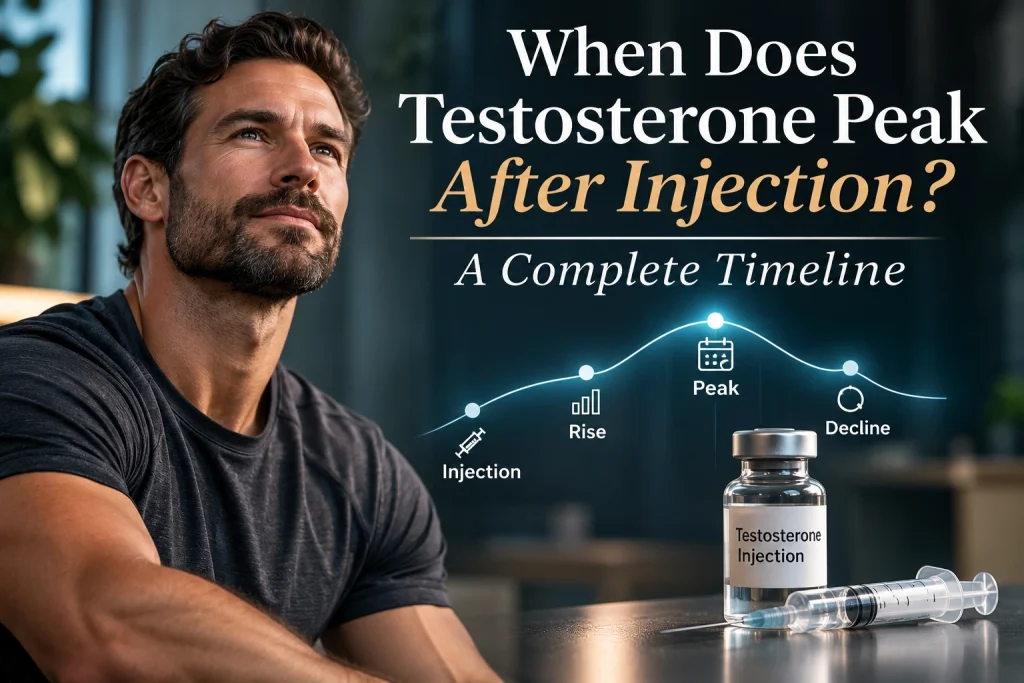
Testosterone cypionate and enanthate usually reach their highest point in your blood 24 to 72 hours after an injection, with most men peaking around day two or three. Testosterone undecanoate works differently, peaking closer to day seven. The exact timing depends on the ester, your injection method, and your own body. Knowing your peak helps […]
What Happens When You Stop Taking Testosterone?
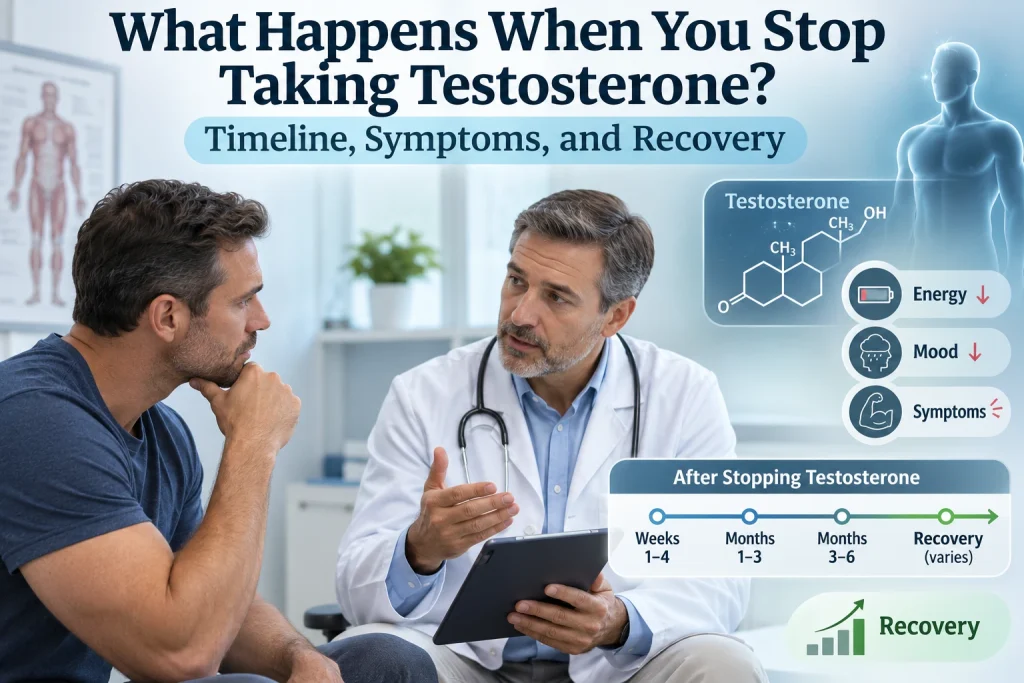
When you stop taking testosterone, your body’s natural production doesn’t turn back on right away. Fatigue, mood changes, and lower sex drive can show up within one to four weeks. Most men’s hormone levels do recover over several months to two years, depending on how long they were on therapy. Tapering off with medical support […]
Testosterone Injection Subcutaneous vs Intramuscular

Subcutaneous and intramuscular testosterone injections reach similar testosterone levels when they’re dosed correctly. SubQ shots go into the fat layer with a smaller needle, often hurt less, and some data link them to steadier levels and lower hematocrit. IM shots go deep into muscle and have decades of use behind them. The right choice depends […]
Do You Need Anastrozole on TRT?

Most men on testosterone replacement therapy don’t need anastrozole just because they started treatment. It’s only useful when estrogen climbs high enough to cause real symptoms, like breast tenderness or heavy water retention. Typical doses are low, often 0.25 mg once or twice a week, and more is not better since pushing estrogen too low […]
Can Lack of Sleep Cause Erectile Dysfunction?
Yes, poor sleep can contribute to erectile dysfunction. Short or broken sleep is linked to lower testosterone, damage to blood vessels, fewer healthy nighttime erections, and more stress, all of which affect how well erections work. Sleep apnea and insomnia are both tied to a higher ED risk. The good news is that sleep-related ED […]
Rapid Weight Loss and Erectile Dysfunction
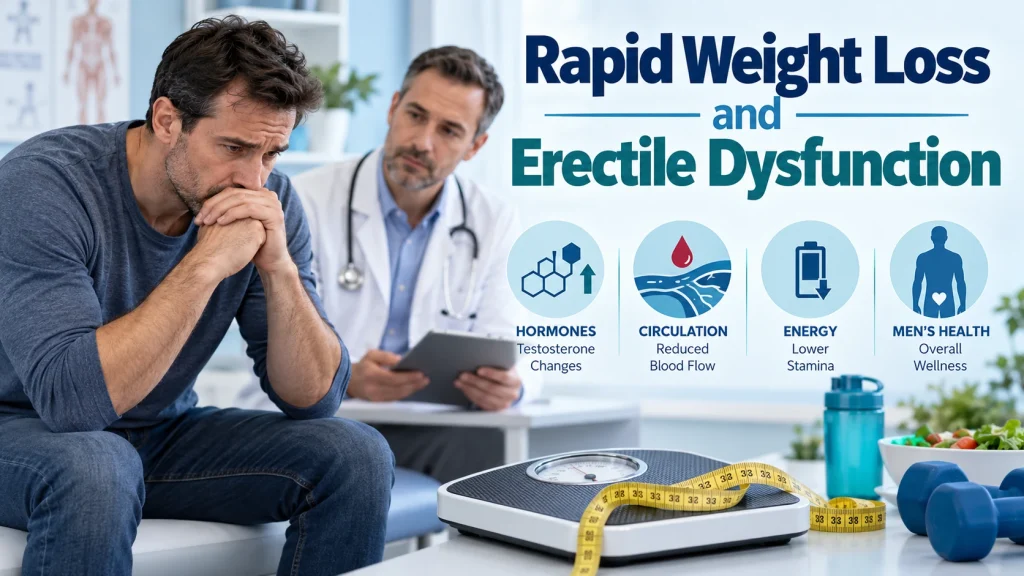
Losing weight, especially around the belly, generally improves erectile function by raising testosterone and improving blood flow. But losing it very fast, especially on semaglutide or tirzepatide, carries a separate risk: muscle loss and testosterone dips that can work against you. The fix isn’t avoiding rapid weight loss. It’s doing it under medical supervision that […]
Clomid vs HCG

Clomid and HCG both raise testosterone and support fertility, but they work in different ways and fit different situations. Clomid is a daily pill that works through your pituitary gland, while HCG is an injection that acts directly on your testicles. Neither option is better for every man. The right pick depends on your fertility […]
Enclomiphene Cycle Length

Enclomiphene cycle length isn’t fixed. It can run a few weeks for post-cycle recovery or several months of ongoing use for testosterone support, depending on your goal and bloodwork. Most men notice changes within 3 to 4 weeks and stabilize by 8 to 12 weeks, with a doctor adjusting length from there. If you’ve searched […]