
TRT Night Sweats: What You Can Do About Them

Waking up drenched in sweat can be frustrating, especially if you’ve recently started testosterone replacement therapy (TRT). Many men wonder whether TRT night sweats are normal, if they signal a problem, or if they mean their treatment isn’t working correctly. The truth is that both low testosterone and TRT can be linked to night sweats. […]
What Causes Hormonal Imbalance in Men?

Feeling tired all the time? Struggling with weight gain despite eating well and exercising? Noticing a lower sex drive, mood changes, or difficulty building muscle? Many men assume these issues are simply part of getting older. While age can affect hormone levels, it’s not always the full story. Hormonal imbalances can happen at almost any […]
Enclomiphene vs TRT
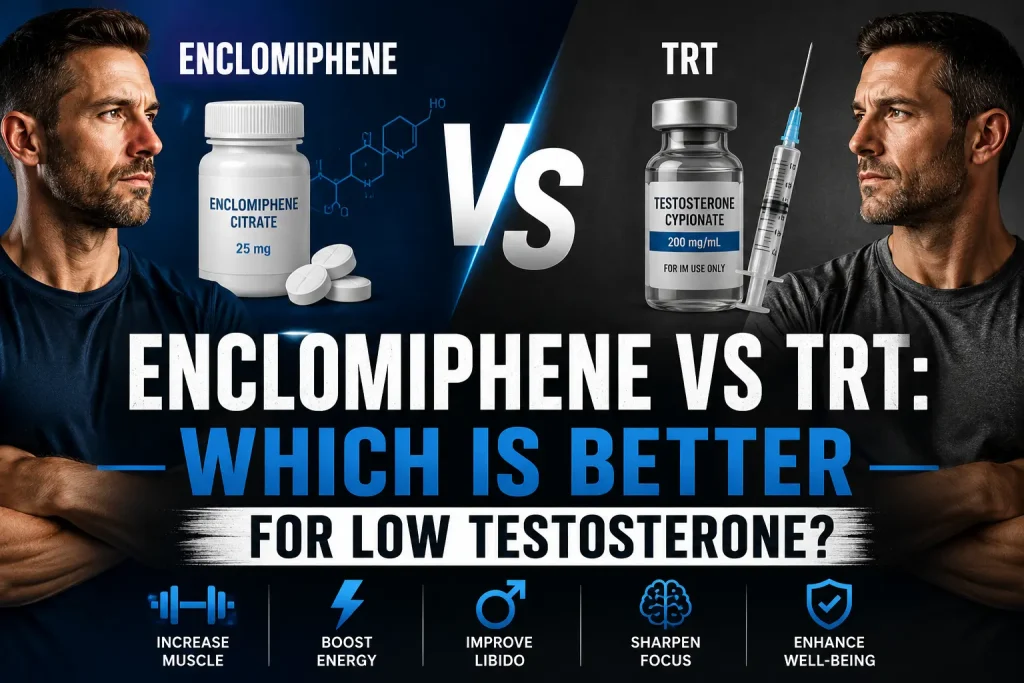
Low testosterone can affect far more than sex drive alone. Many men dealing with low testosterone notice fatigue, poor workout recovery, brain fog, low motivation, mood changes, muscle loss, weight gain, and difficulty maintaining energy throughout the day. When researching treatment options, two names commonly come up: enclomiphene and testosterone replacement therapy (TRT). Both treatments […]
Andropause Symptoms

Feeling constantly tired, less motivated, mentally foggy, or noticing a lower sex drive can be frustrating, especially when those changes seem to happen gradually over time. Many men assume these symptoms are simply part of getting older, but in some cases, declining testosterone levels may be contributing to how they feel. This age-related hormone decline […]
Sermorelin With TRT
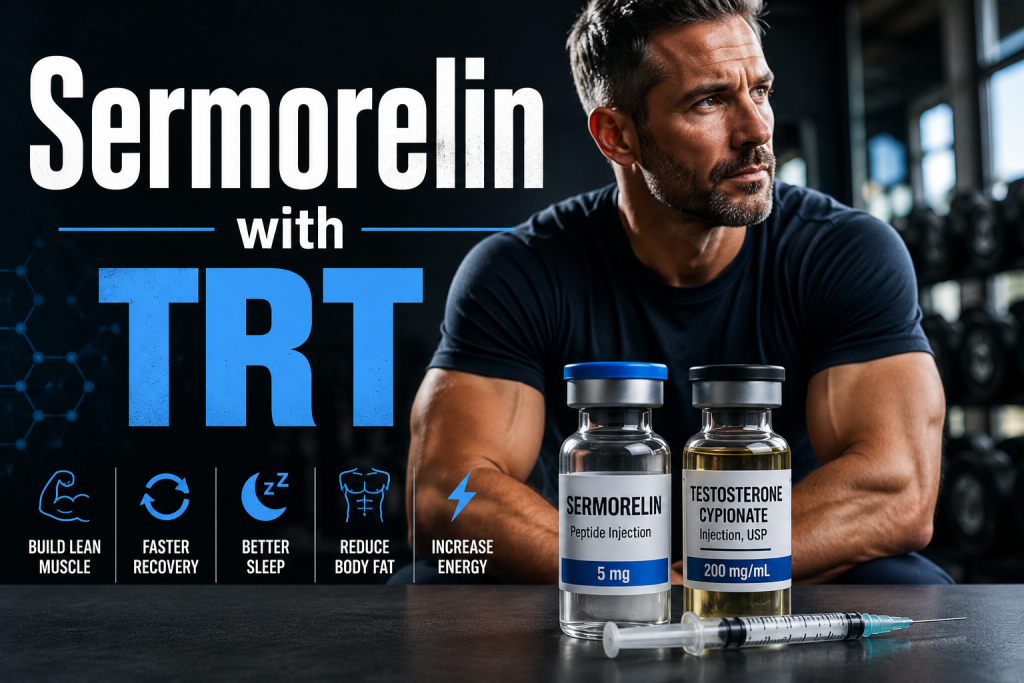
Many men start testosterone replacement therapy (TRT) hoping to feel like themselves again. Better energy, improved libido, increased muscle mass, and sharper mental focus are some of the most common reasons men begin treatment. But even after testosterone levels improve, some men still struggle with slow workout recovery, stubborn belly fat, poor sleep, etc. That […]
TRT Workout
Starting testosterone replacement therapy (TRT) can feel like a reset, more energy, better recovery, and the ability to train harder. But here’s what actually drives your results: TRT improves the environment. Your training determines the outcome. If you want to build muscle, lose fat, and perform at a higher level, your workouts need to match […]
Semaglutide and Blood Pressure
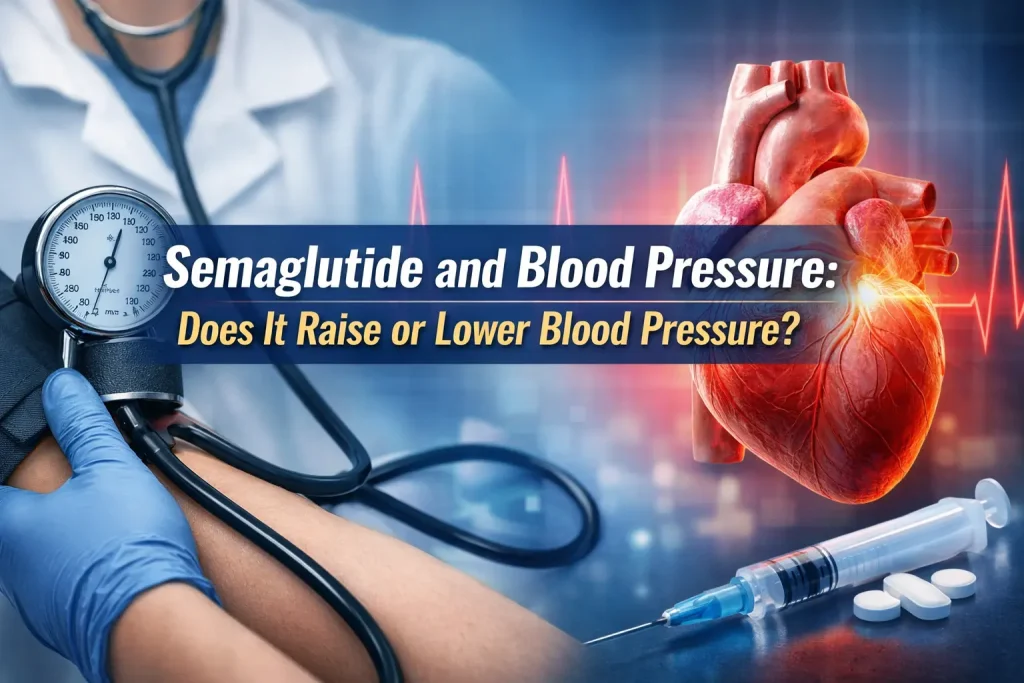
Semaglutide is widely known for supporting weight loss and metabolic health, but many people wonder how it affects blood pressure. Research suggests semaglutide typically lowers systolic blood pressure slightly, often by about 2–6 mmHg. These improvements are commonly linked to weight loss, better insulin sensitivity, and improved cardiovascular health markers. While results can vary from […]
How Long Does It Take for Tirzepatide to Suppress Appetite?

Most people notice reduced appetite within the first 1–2 weeks of starting tirzepatide, although some individuals experience changes in hunger within just a few days. Appetite suppression typically becomes more consistent as the dose increases, with stronger and more stable effects developing over 4–8 weeks. Because tirzepatide works by regulating hormones that control hunger and […]
Does Tirzepatide Burn Fat?
Tirzepatide has gained attention as one of the most effective medications for weight loss, but many people ask a more specific question: does tirzepatide actually burn fat, or does it just reduce appetite? The short answer is yes, tirzepatide helps the body lose fat, not just weight. Research evaluating body composition shows that a large […]
Gaining Weight on Tirzepatide
Yes, it is possible to experience weight gain on tirzepatide, but it is usually temporary or caused by identifiable factors such as water retention, calorie intake changes, hormone imbalances, or dosage adjustments. In many cases, weight gain can be corrected with personalized treatment changes and lifestyle adjustments. Tirzepatide is one of the most effective GLP-1 […]